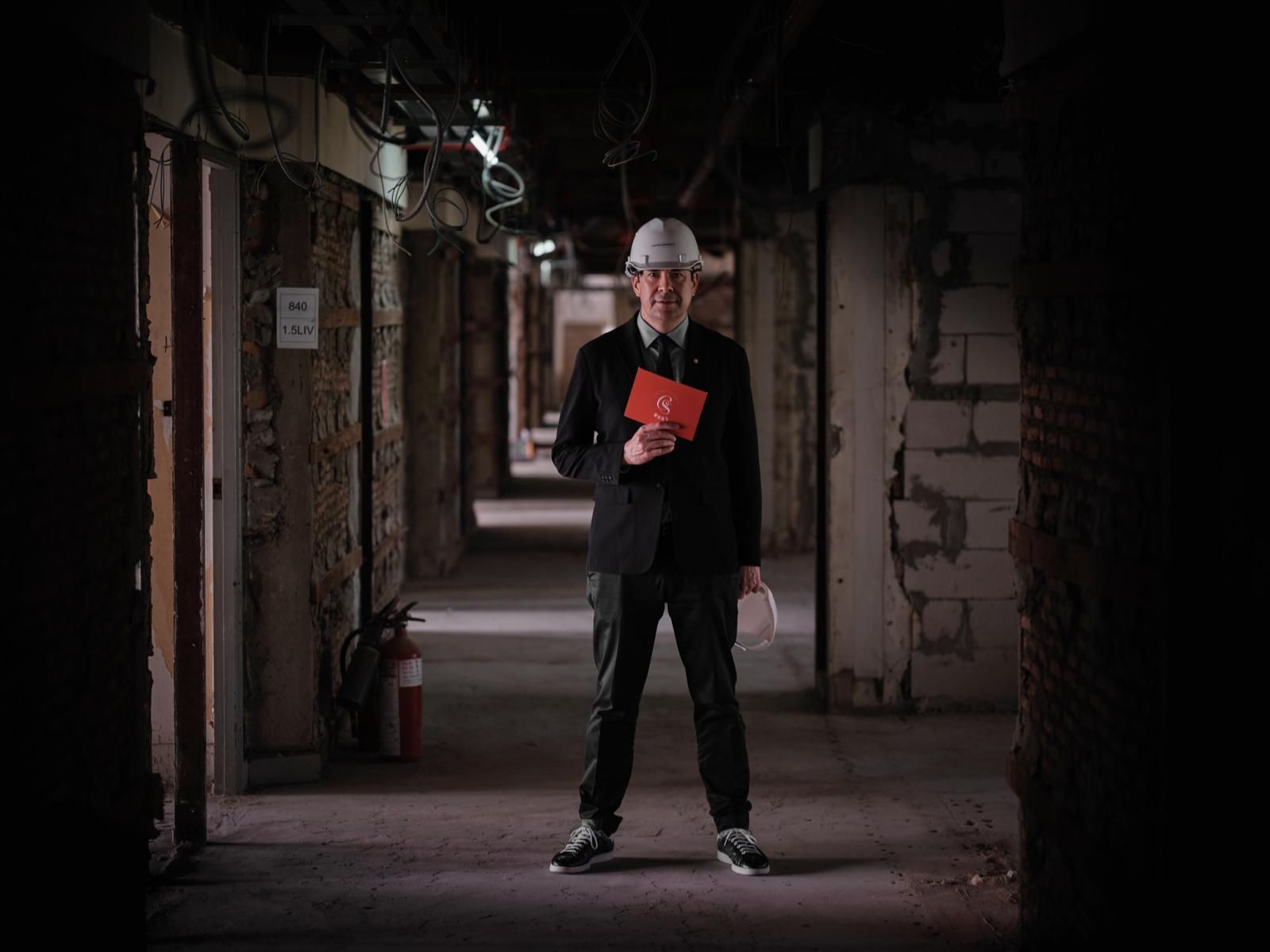

Where a Hotel Tells the Truth
May 17, 2026I laughed when François said one of the first places he checks in a hotel is the men’s room. Then he explained it, and of course he was right.
You see the corners there. You see what has been cleaned properly and what has only been made presentable. You see whether the place is managed when nobody important is looking.
Hotels are very good at showing you what they want you to see: the flowers in the lobby, the suite, the view, the restaurant, the arrival sequence. All of that matters. But it is not always where the truth of the house lives.
The truth is often somewhere less convenient. Behind the door. In the corridor. In the way the uniform is worn at the end of a long shift. In the way somebody stands near the entrance when there is nothing obvious to do. In the way a small mistake is admitted before it becomes a larger one.
François notices these things quickly. He has spent his life around some of the most recognised hotels in the world, but he does not speak about them with the inflated language people often use around expensive places. He is suspicious of the word luxury. When it is written too loudly, he worries. The building, the service, the people and the feeling should already say enough.
A proper hotel gives evidence before it gives language.
That evidence is rarely dramatic. A clean corner. A polished handle. A team member who still looks proud in the uniform. A lobby that feels watched without feeling controlled. A general manager present enough to sense the rhythm of the day.
François still believes a GM should be visible. Not hidden upstairs in an office, answering every request from head office, but near the entrance, close enough to see the arrival, the hesitation, the guest who has had a bad journey, the team member who needs support before the pressure shows.
I have seen him do this many times. You arrive for breakfast or lunch and he is already there, not performing, just present. Looking around. Saying hello. Excusing himself because a guest has arrived and he wants to greet them properly.
This is not old-fashioned. It is practical. The lobby tells you things no report can tell you.
The same idea appeared when François spoke about mistakes. His non-negotiable is not that mistakes never happen. His non-negotiable is lying.
A mistake can be repaired if it is shared quickly. Reception knows, housekeeping knows, the restaurant knows, the manager knows. The guest becomes someone who needs particular attention because the house has failed them in some small way.
If the mistake is hidden, the system becomes blind. Nobody knows what they are repairing. Nobody understands why the guest is annoyed. The next person smiles politely and makes it worse.
Maybe that is why the men’s room test stayed with me. It removes the performance. It takes you away from the brochure and into the behaviour of the house.
A hotel can say many things about itself.
The corner usually tells you more.
Stay inside the World of CS
Get the OPOD Weekly Briefing, access to full-length Game Changer interviews, new Notebook releases, Academy masterclass updates and selected exclusive content.
For people building better standards, stronger teams and more memorable guest experiences.